
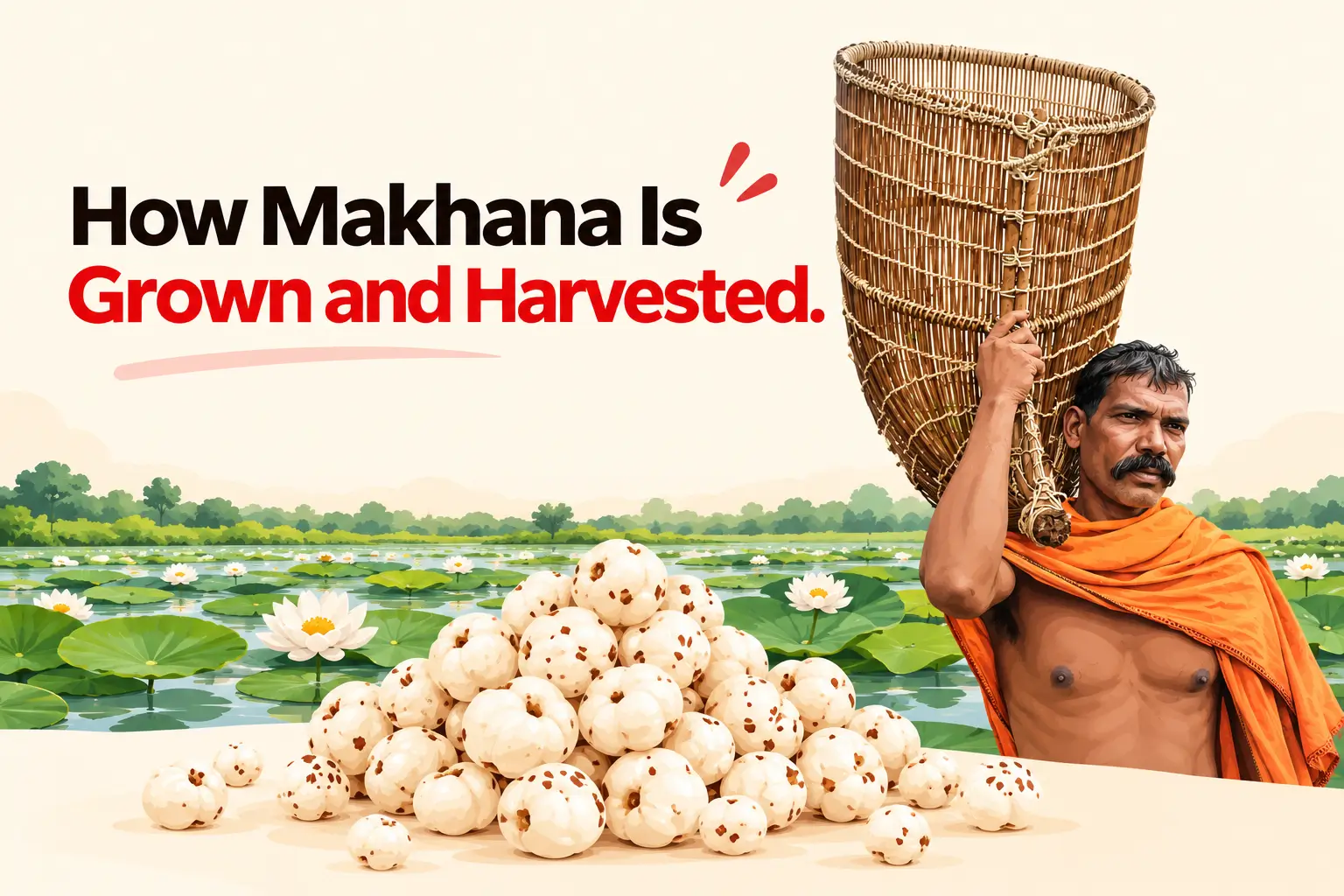
That light, crunchy makhana in your snack bowl started its life at the bottom of a muddy pond in north Bihar. Someone dived for it, someone roasted it twice over a fire, and someone cracked it open by hand. Here is how it really happens, step by step, in simple words.
First, meet the plant
Makhana comes from Euryale ferox, a water lily that grows in still, shallow water. People often call makhana “lotus seeds”, but it is actually a different plant. The lotus is Nelumbo; makhana is its thorny cousin.
And thorny it is. The round leaves float flat on the water, can grow wider than a metre, and are covered with sharp spines on top and below. Stems, flower buds and even the fruit have prickles. In summer the plant pushes up small purple flowers. Each flower turns into a spiky, round fruit that holds a few dozen hard, black seeds, each about the size of a pea or a small marble.
Those black seeds are not what you eat directly. The white puff you know as makhana is the kernel inside, and getting it out is the hard part. More on that below.
Why Mithila is makhana country
Makhana loves warm, humid weather and stagnant water around one to two metres deep. North Bihar’s Mithila region has exactly that. Thousands of village ponds, low-lying wetlands (locally called chaur) and old river channels fill up with monsoon water every year. Districts like Darbhanga, Madhubani, Purnea, Katihar, Saharsa, Supaul, Araria, Kishanganj and Sitamarhi are where most of India’s makhana is grown and processed.
In 2022, “Mithila Makhana” got a GI (Geographical Indication) tag. In simple terms, it is official recognition that makhana from this region has a specific origin and a long tradition behind it, the same way Darjeeling tea does. The government has also been putting more focus on the crop, including plans for a dedicated Makhana Board for Bihar announced in 2025.
Makhana is part of local culture too. In Mithila it shows up in festivals and rituals, and it is a big part of Kojagara, the full moon night in autumn when families celebrate and share makhana with relatives.
Two ways to grow makhana
Tap the tabs to compare the old pond method with the newer field method.
The traditional way, used for generations.
- Grown in natural ponds and wetlands about 1 to 2 metres deep.
- Farmers often do not sow fresh seed every year. Seeds left behind in the pond mud from last season sprout again on their own in winter.
- The crop grows through spring and summer. Ripe fruits burst under water and the seeds sink into the mud at the bottom.
- Harvesting means diving to the pond floor and collecting seeds from the mud by hand, usually from August to October.
- Since the water is deep, the pond can’t be used for much else during the season. Fish farming alongside is common.
A newer way, promoted by researchers in Bihar.
- Developed with help from the ICAR research centre for makhana in Darbhanga and Bihar Agricultural University, Sabour.
- Grown in regular low-lying fields that hold only about 30 cm (one foot) of water.
- Seedlings are raised in a nursery in winter and transplanted into the field around February–March, much like paddy.
- Shallow water makes harvesting easier and less risky than deep diving, and harvest usually comes a little earlier.
- Improved varieties like Swarna Vaidehi and Sabour Makhana-1 were bred for better yield.
- After makhana, the same field can often take another crop in the same year.
The makhana calendar, month by month
Timing shifts a little with weather and method, but a typical pond season looks like this:
- Dec – JanSeeds in the pond mud start to sprout. In the field method, the nursery is set up now.
- Feb – MarYoung leaves reach the surface. Field-method seedlings are transplanted.
- Apr – MayThe big thorny leaves cover the water. Purple flowers start to appear.
- Jun – JulFlowers turn into spiky fruits. As they ripen they burst and the seeds sink to the bottom.
- Aug – OctHarvest season. Seeds are collected from the pond floor, then cleaned and dried.
- Sep onwardsRoasting and popping season. Fresh makhana reaches markets across India.
The harvest: one of the toughest jobs in farming
This is the part most people never hear about. In the pond method, the seeds are lying in soft mud at the bottom of the pond. Harvesters, traditionally from the Mallah (fisherfolk) community, dive down again and again, scoop the mud-and-seed mix with their hands or bamboo tools, and bring it up. They hold their breath each time, and a working day can mean hundreds of dives in murky water.
On the surface, the mud is washed away in bamboo baskets and sieves, and the black seeds are collected. The field method has made this much easier in many places, but pond harvesting is still common.
Next time you wonder why makhana costs more than chips: almost every step, from diving to popping, is done by hand. Very little of it is machine work even today.
From hard black seed to white puff
The seeds that come out of the pond are hard, black and not ready to eat. Here is how they become makhana:
-
Clean and wash
Seeds are washed many times to remove mud, and rubbed to clean off the slimy outer layer.
-
Sort by size
Seeds are passed through sieves of different sizes. Bigger seeds will give bigger puffs, so they are kept separate.
-
Sun dry
The seeds are spread out in the sun for a few hours to bring down moisture. Too dry or too wet, and they won’t pop well.
-
First roast, then rest
Seeds are roasted in a hot iron or clay pan, stirred all the time, and then kept covered for a day or two. This rest lets the kernel loosen from the shell.
-
Second roast and the “pop”
The seeds go back on a very hot pan. A worker scoops out a handful of hot seeds and strikes them with a wooden mallet. The shell cracks and the kernel puffs out instantly into white makhana. This needs serious skill and speed.
-
Polish and grade
The puffs are rubbed to clean off bits of shell, then sorted by size. The biggest, whitest ones become premium “phool makhana”.
Makhana words you might hear
Guri is the raw black seed, the way it comes out of the pond. This is what farmers sell to processors.
Lawa is the popped white makhana, the one you buy and eat. “Phool makhana” is another common name for it.
Suta is a size unit used by traders to grade popped makhana. You may see grades like 4 suta, 5 suta or 6 suta. Higher suta means bigger puffs and a higher price.
How to pick good makhana at home
Size
Bigger, evenly sized puffs usually mean a higher grade and a lighter crunch.
Colour
Look for off-white puffs with small brown patches from the shell. That is normal.
Crunch test
Press one between your fingers. It should crack cleanly, not bend or feel chewy.
Storage
Makhana pulls moisture from the air. Keep it in an airtight jar. Gone soft? Dry roast on low flame for 3–4 minutes.
And then, the Munchful part
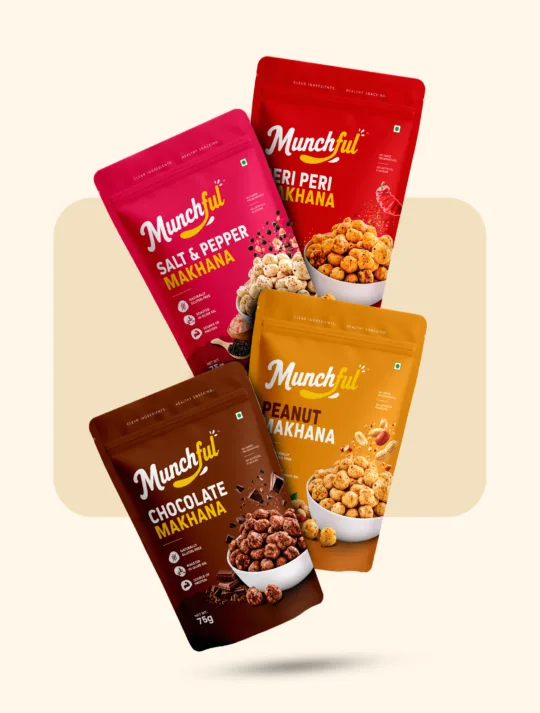
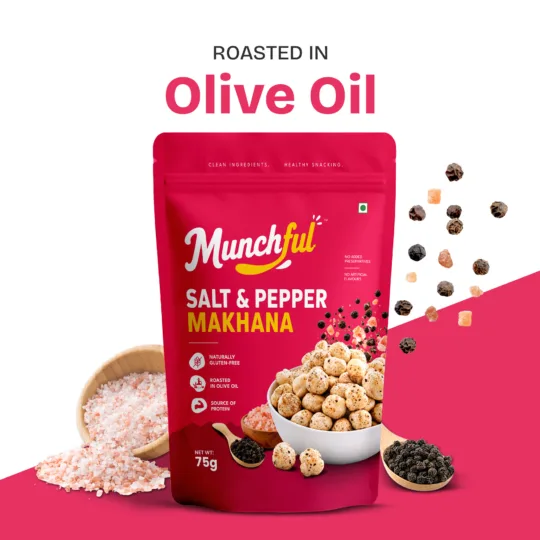
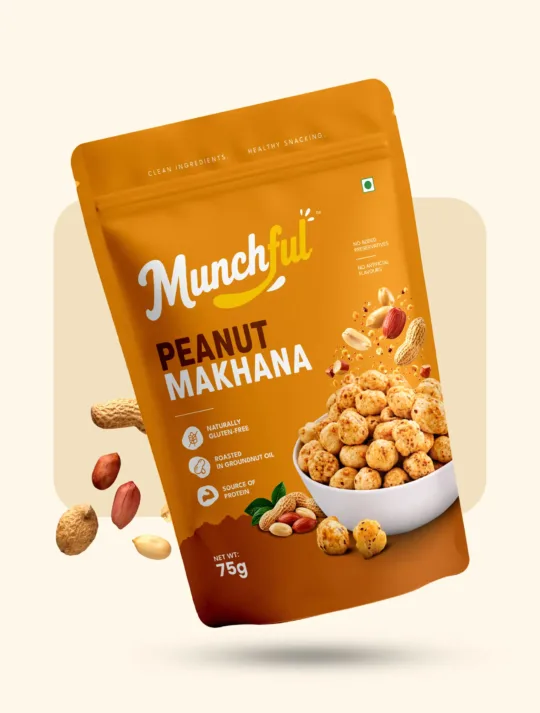
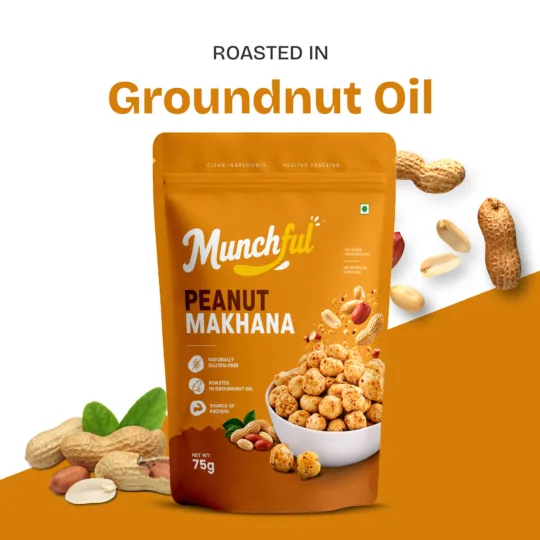
We don’t own makhana farms. We source our makhana from the wetlands of Bihar, then roast it in olive oil (our Peanut flavour uses groundnut oil) and season it, with no artificial flavours or colours, no preservatives and no palm oil. All that hard work in the ponds deserves a clean snack at the end. Want to know what makhana does for you? Read our 10 health benefits of makhana.
Shop all makhanaFrequently asked questions
Is makhana the same as lotus seed?
Not exactly. Makhana is often sold as “lotus seeds”, but it comes from Euryale ferox, a thorny water lily. The true lotus (Nelumbo nucifera) is a different plant, and its seeds look and taste different.
Where is most makhana grown in India?
In north Bihar, mainly the Mithila and Seemanchal belt: Darbhanga, Madhubani, Purnea, Katihar, Saharsa, Supaul, Araria and nearby districts. Smaller amounts come from states like Assam, West Bengal and Manipur.
When is makhana harvested?
Pond makhana is mostly harvested from August to October. With the field method it can come a little earlier. Popping and processing carry on for months after that.
What does the Mithila Makhana GI tag mean?
A Geographical Indication tag, given in 2022, recognises that makhana from the Mithila region of Bihar has a special origin and traditional know-how behind it. It helps protect the name and supports local growers.
Why is makhana more expensive than other snacks?
Because most of the work is still manual. Seeds are collected by divers, then cleaned, dried, roasted twice and popped by hand. Around 3 kg of raw seeds give only about 1 kg of popped makhana, so a lot of effort goes into every packet.
Why does makhana turn soft, and can I fix it?
Makhana absorbs moisture from the air once the pack is open. Store it in an airtight container. If it has gone soft, dry roast it in a pan on low flame for 3–4 minutes, let it cool, and the crunch comes back.