
Makhana has gone from a vrat and kheer ingredient to a snack you find in office drawers and gym bags. But what does it actually do for you? Here are 10 real, no-hype benefits, plus how to eat it smartly.
Quick note before we start: makhana is a good food, not a medicine. Nothing here is medical advice. If you have a health condition, talk to your doctor or dietitian about what suits you.
Wait, what exactly is makhana?
Makhana (fox nut, phool makhana) is the popped seed of Euryale ferox, a thorny water lily grown mostly in the ponds of north Bihar. The seed is roasted and cracked open by hand, and the kernel puffs into the light white ball you know. If you are curious about that journey, read our post on how makhana is grown and harvested.
The 10 health benefits
1. A big bowl that is light on the stomach
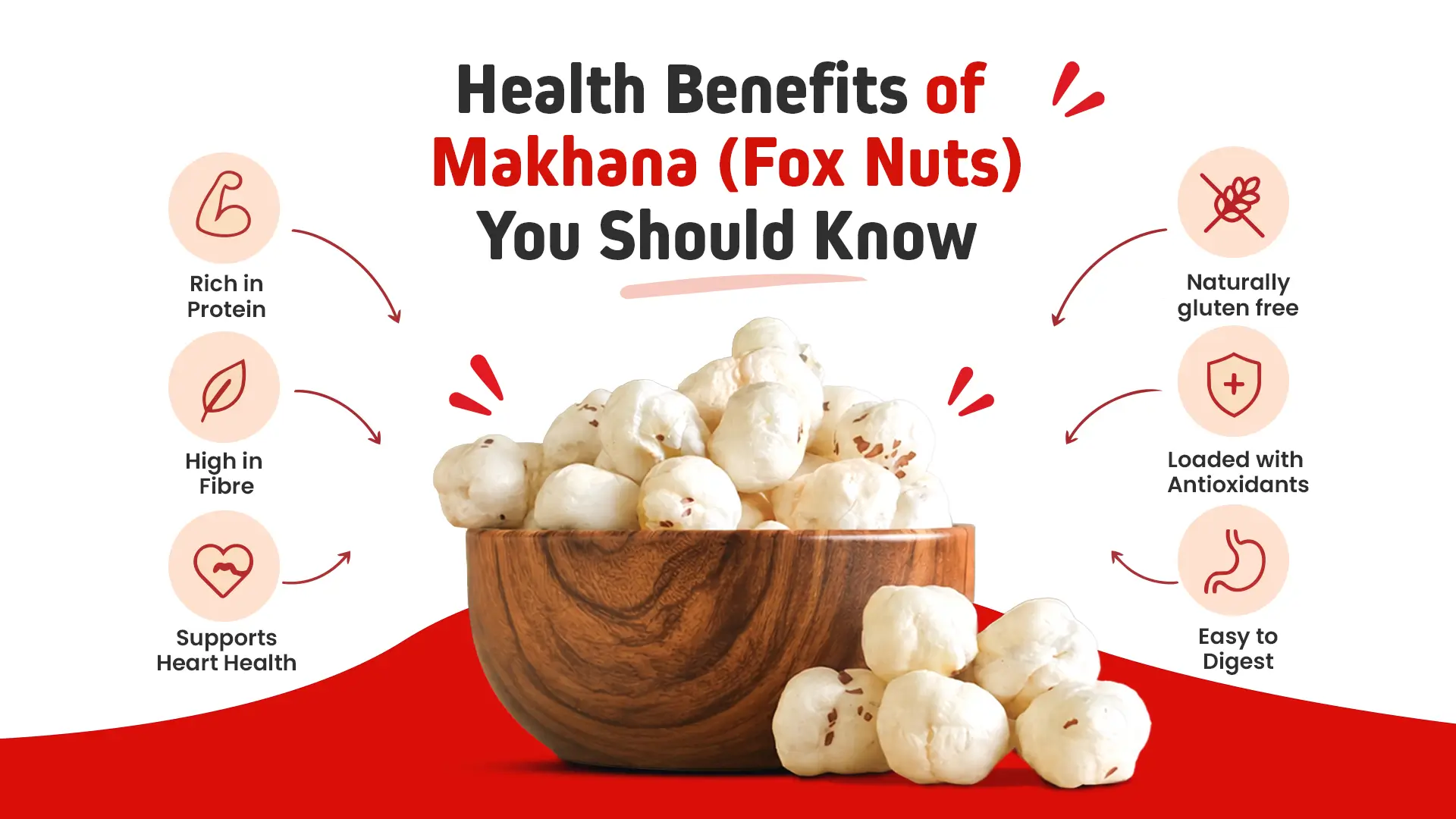
Makhana is mostly air once it pops. So a full cereal bowl of makhana weighs about the same as a small handful of nuts. You get the feeling of eating “a lot” and the satisfying crunch, without the heaviness. That makes it handy when you want to snack but not overeat.
2. Plant protein in a snack
Most chips and namkeen give you little protein. Makhana naturally has some plant protein, which helps a snack keep you going a bit longer. Our flavoured packs are a source of protein. It won’t replace dal, paneer or eggs in your meals, but it is a smarter in-between bite.
3. Naturally very low in fat
Raw makhana has almost no fat of its own. Any fat in a ready snack comes from the oil used for roasting. That is why the oil matters, which brings us to the next point.
4. Roasted, not deep-fried
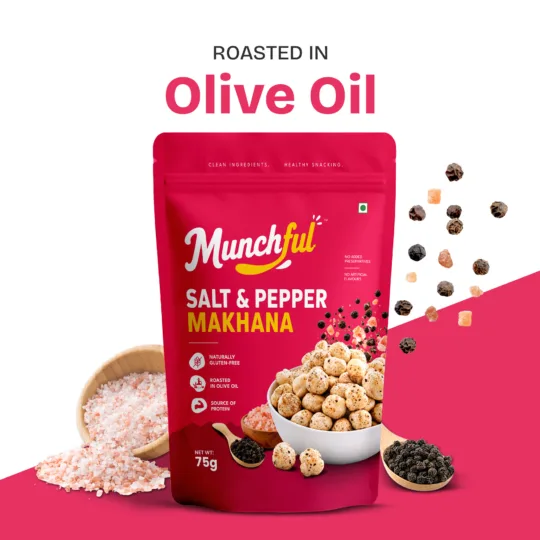
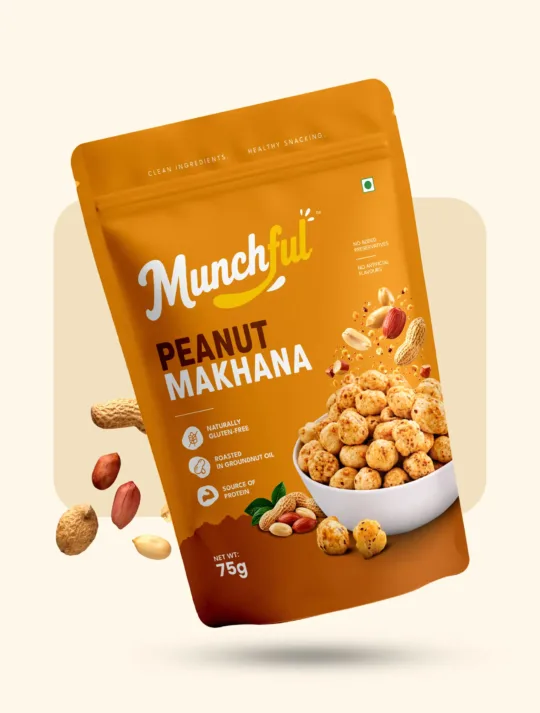
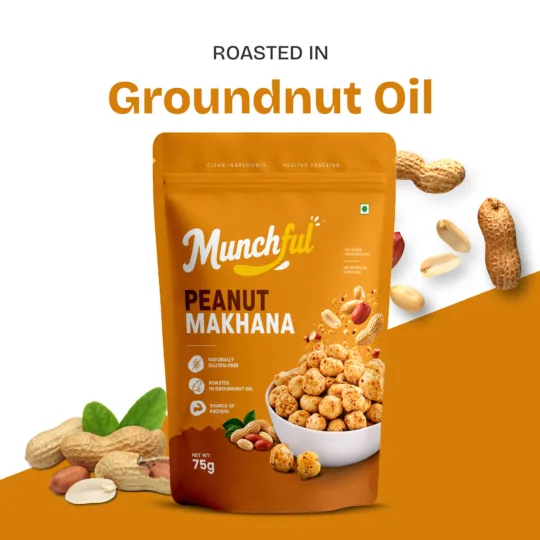
Makhana tastes great after a light roast, so it doesn’t need deep frying like many packaged snacks. We roast ours in olive oil (Peanut uses groundnut oil) and keep it palm-oil free. Swapping a fried snack for a roasted one is one of the easiest small changes you can make.
5. Brings minerals to your plate
Makhana contains minerals like magnesium, potassium and phosphorus. Magnesium and potassium are two that many Indian diets fall short on. A snack won’t fix your whole diet, but it can add a little where chips add nothing.
6. Low in sodium when plain
Plain makhana is naturally low in sodium and has potassium. Eating less salt is one of the simple habits doctors recommend for a healthy heart and blood pressure. Flavoured makhana has added salt from the seasoning, so check the label and keep portions sensible.
7. Has natural antioxidants
Lab studies on Euryale ferox seeds have found plant compounds such as flavonoids and other polyphenols, which act as antioxidants. Most of this research is early, done in labs and on animals, so treat it as a nice bonus rather than a promise.
8. Naturally gluten-free
Makhana is a seed, not a grain, so it has no gluten. That makes it a handy snack for people who avoid wheat. If you need strictly gluten-free food, always check the pack for seasoning ingredients and how it is made.
9. Fits fasting days
Plain makhana is one of the most common foods eaten during vrat in India, on Navratri, Ekadashi and other fasts. It is filling, easy to digest for most people and works in sweet or salty dishes. For a strict vrat, use plain makhana with sendha namak, since flavoured snacks have other spices.
10. Easy to fit into any meal
You can eat it as is, toss it into a trail mix, add it to kheer, cook it in a curry like makhana matar, or sprinkle crushed makhana on raita. When a healthy food is this easy to use, you actually end up eating it.
Plain, roasted or flavoured: which one?
- What it is: plain popped makhana, one ingredient only.
- Best for: cooking, kheer, curries, fasting days.
- Keep in mind: it is bland and a bit soft straight from the pack. Roast it before snacking.
- Try: Premium Raw Makhana.
- What it is: raw makhana dry-roasted or roasted with a teaspoon of ghee or oil, plus salt and spices.
- Best for: full control over salt and oil.
- Keep in mind: it goes soft in a day or two if not stored airtight.
- How: low flame, 8–10 minutes, stir often, until one breaks with a clean crunch.
- What it is: roasted and seasoned, ready to eat.
- Best for: office, travel, evening chai time.
- Keep in mind: seasonings add salt and sometimes sugar. Read the label and stick to a portion.
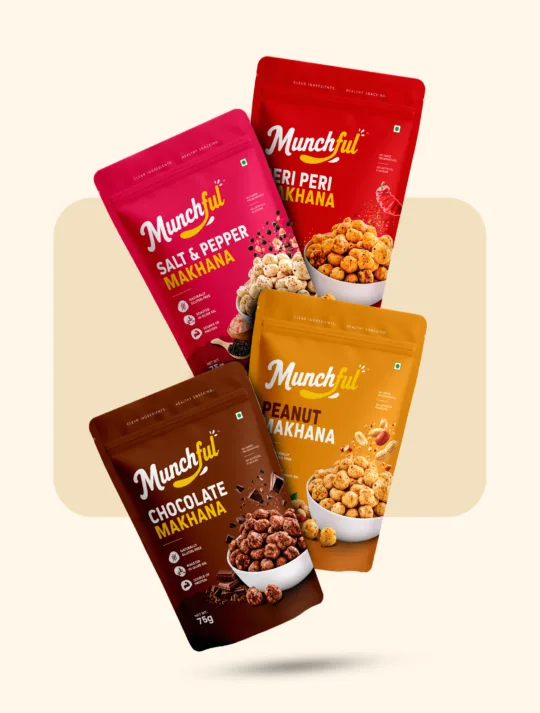
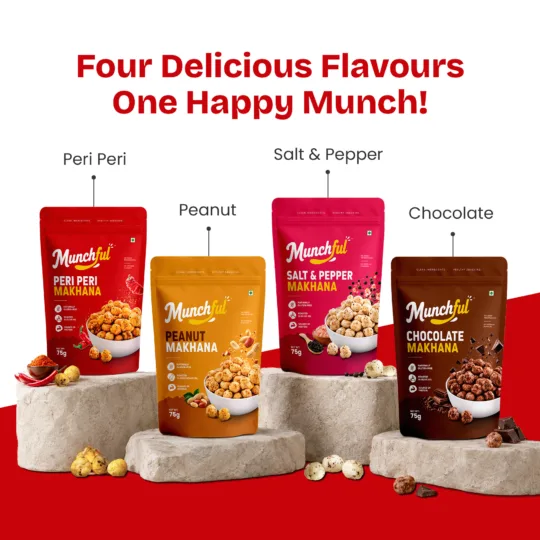
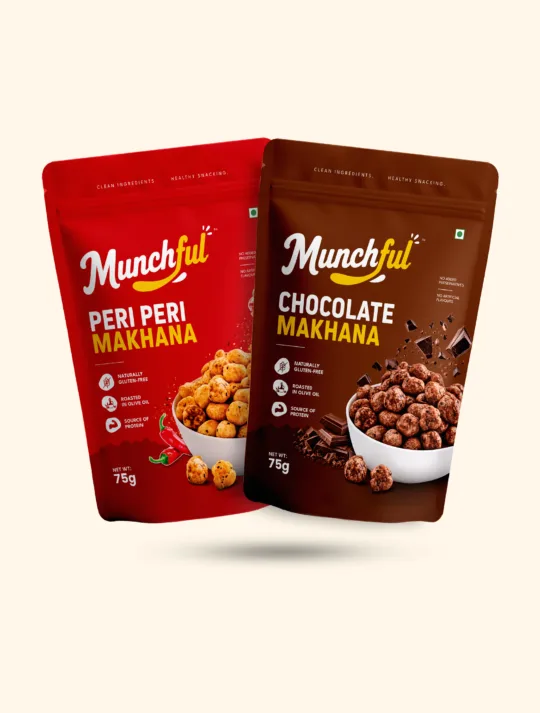
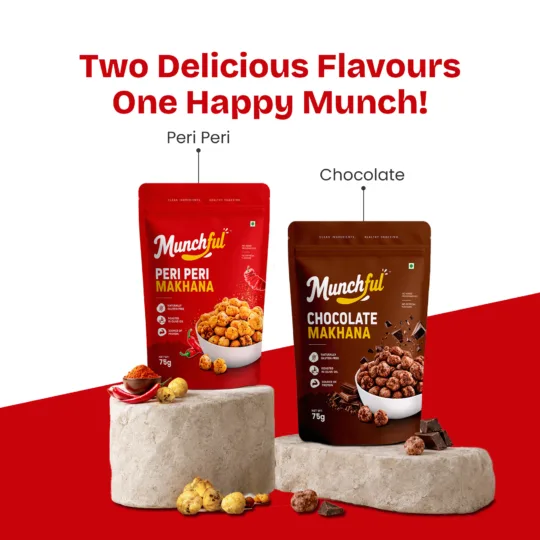
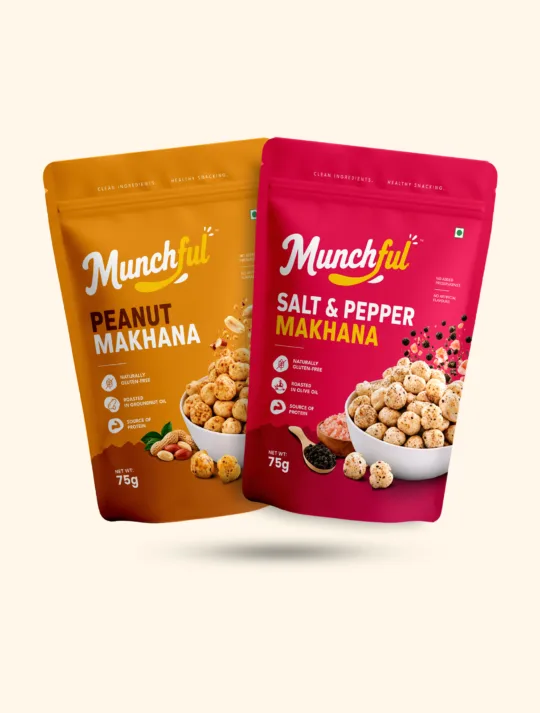
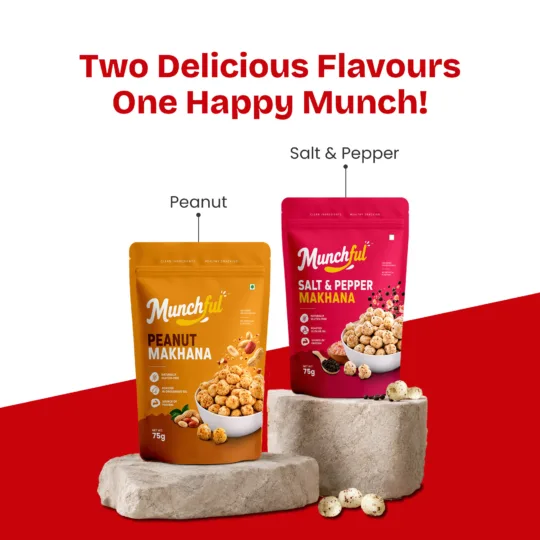
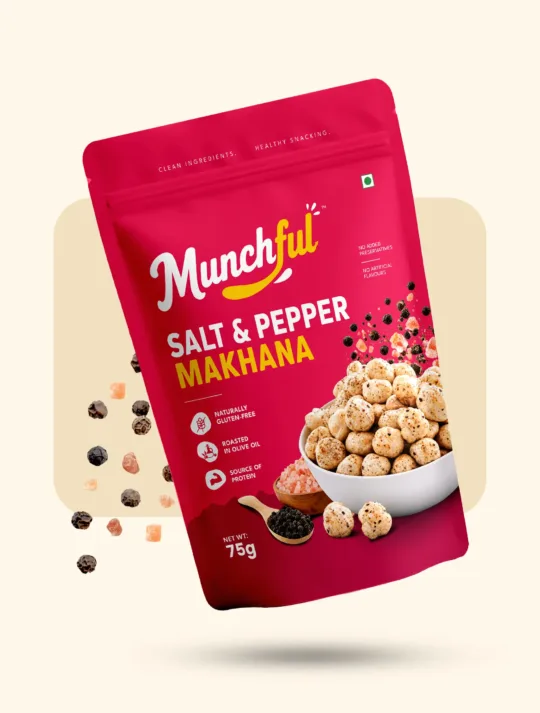
- Try: Peri Peri, Salt & Pepper, Peanut or Chocolate.
When to eat it during the day
The 11 am slump is when the biscuit packet comes out. A small bowl of makhana with a fruit carries you to lunch without feeling heavy.
Chai and something crunchy is a national habit. Make that crunchy thing roasted makhana instead of samosa, bhujia or biscuits a few days a week.
If you are a late-night snacker, a measured bowl of makhana beats reaching for a family-size packet of chips. Pour a portion into a bowl, don’t eat straight from the pack.
How much makhana is enough?
One bowl
Around 25–30 g (a cereal-bowl full) is a sensible snack portion for most adults.
Drink water
Makhana is dry. Too much without enough water can leave some people feeling bloated.
Read the label
For flavoured packs, look at salt, sugar and allergens. Our Peanut flavour contains peanuts.
Small kids
Whole puffs can be a choking risk for toddlers. Crush them or keep an eye while they eat.
Snack on Munchful makhana
Sourced from the wetlands of Bihar, roasted in olive oil (Peanut in groundnut oil), with no artificial flavours or colours, no preservatives and no palm oil.
Shop all makhanaFrequently asked questions
Is it okay to eat makhana every day?
Yes, for most healthy adults a bowl of makhana a day is fine as part of a balanced diet. Keep the portion sensible, drink enough water, and go easy on heavily salted versions.
Is makhana good for weight loss?
No single food makes you lose weight. Makhana can help because it is light, filling and roasted rather than fried, so it is a good swap for chips or biscuits. Your overall diet and activity matter most.
Can people with diabetes eat makhana?
Many people with diabetes include small portions of plain makhana, but it does contain carbohydrates. Check with your doctor or dietitian about portions, and read the label on flavoured packs.
Is makhana better than peanuts or almonds?
They are different. Nuts have more protein and healthy fats but also many more calories per handful. Makhana is lighter and lower in fat. Both can have a place in your snacking.
Can I eat makhana during a fast?
Plain makhana is widely eaten during vrat. Roast it with ghee and sendha namak. Flavoured makhana has other spices and seasonings, so it may not suit a strict fast.
Does makhana have any side effects?
Makhana is safe for most people. Eating a lot in one go without water can cause bloating or constipation for some. Flavoured packs add salt, and our Peanut flavour contains peanuts, so check if you have an allergy.